From the Industrial Institute of Algeria to the École Nationale Polytechnique: a century of training engineers in the service of the country.
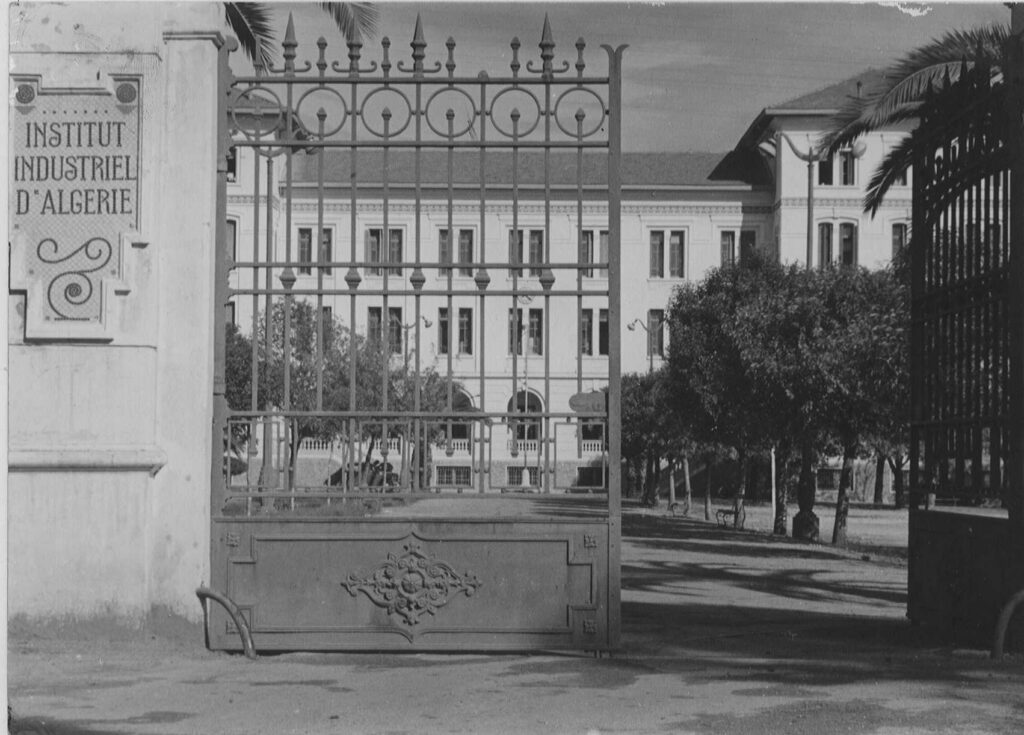
From the Industrial Institute of Algeria to the École Nationale Polytechnique: a century of training engineers in the service of the country.
Memory
The School's milestones, from 1925 to today — browse the timeline.
1925 — 2025 · 100 YEARS
One century of polytechnic leadership and deployment of the cognitive smart AI portal.
1925 — 1962
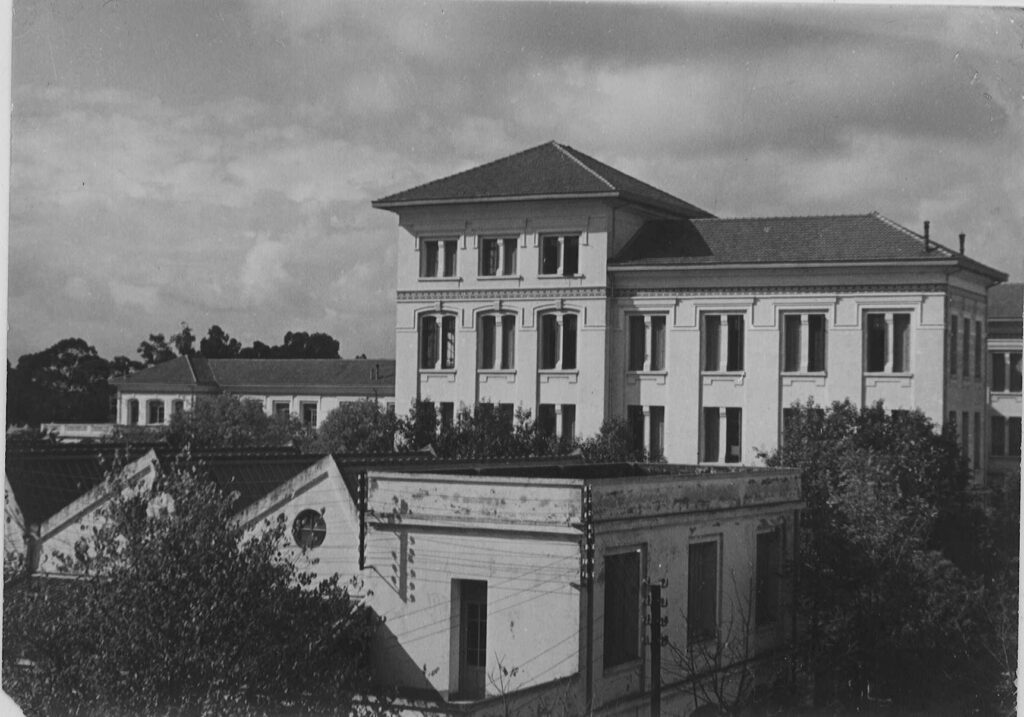
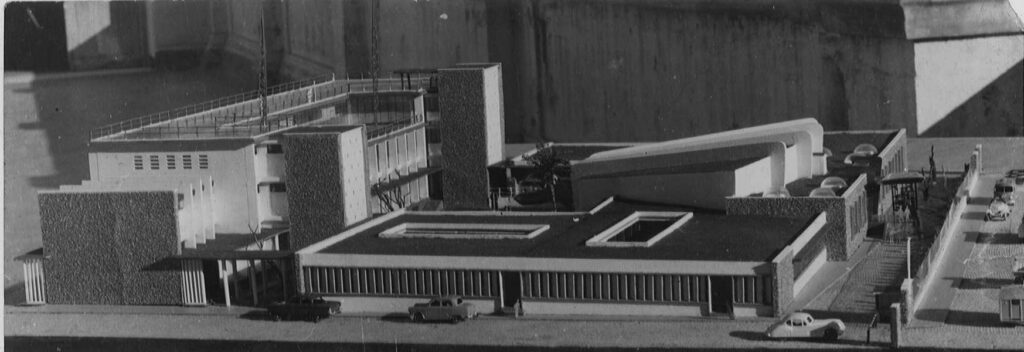
Founded in 1925 as the Industrial Institute of Algeria and opened in October 1926, the institution first trained senior technicians for public services and industry. Closed by the war in 1942 and reopened in 1945, it raised its academic level until the creation, in 1950, of the Public Works and Building engineering degree — becoming the National School of Public Works and Building Engineers. Electrical engineering and electronics were added in 1955, and in 1958 it became the National School of Engineers of Algiers, with five specialties: public works, building, electrical engineering, electronics and mechanics.
1962 — 1983
In November 1962, six returning professors and four new teachers welcomed 71 engineering students. Twenty-four of them, coming from universities at the call of the Minister of National Education, interrupted often well-advanced degrees to form ENP's first class of engineers.
They set an example of dedication through their contribution to the country's economic development.
Enrolment grew from 147 students in 1963 to 556 in 1973. From October 1963, the School was supported by UNESCO and UNDP: twenty-nine international experts helped build its structures until 1971, while scholarships trained the next generation of Algerian faculty abroad — fully in place by 1978. Experts from Britain, Switzerland, Poland, Romania, Syria, Canada, Germany, the USSR, Bulgaria, France, Belgium, India and Vietnam taught here; the School also trained engineers from Africa and the Middle East. Attached to the University of Algiers and then to USTHB, it gained its autonomy in 1983.
1983 — 2008
Industry ties run deep: before the 1970s, engineering students could receive annual internships, a pre-salary and guaranteed recruitment. From the 1980s, postgraduate research took off; in 1995, framework agreements were signed with some thirty companies, supported by the alumni association (ADEP). Sonatrach, Sonelgaz, Naftal, Air Algérie, Saidal and many others supported final-year projects, magisters and doctorates — some 600 magisters and 163 doctorates trained since 1995. Internationally, the School works with INRIA, took part in the Euro-Mediterranean ESIMEAU and WADI projects, joined the Mediterranean Network of Engineering Schools (RMEI), Schlumberger's "Ambassador School" programme, and the AUF in 2008 — the year of the teaching reform and the launch of the virtual campus.
Today
Training begins with a two-year technological core curriculum, before students are assigned, by order of merit, to the specialty departments. A hundred years after the Institute's gate first opened, the School remains what it has always been: the country's leading source of engineers.